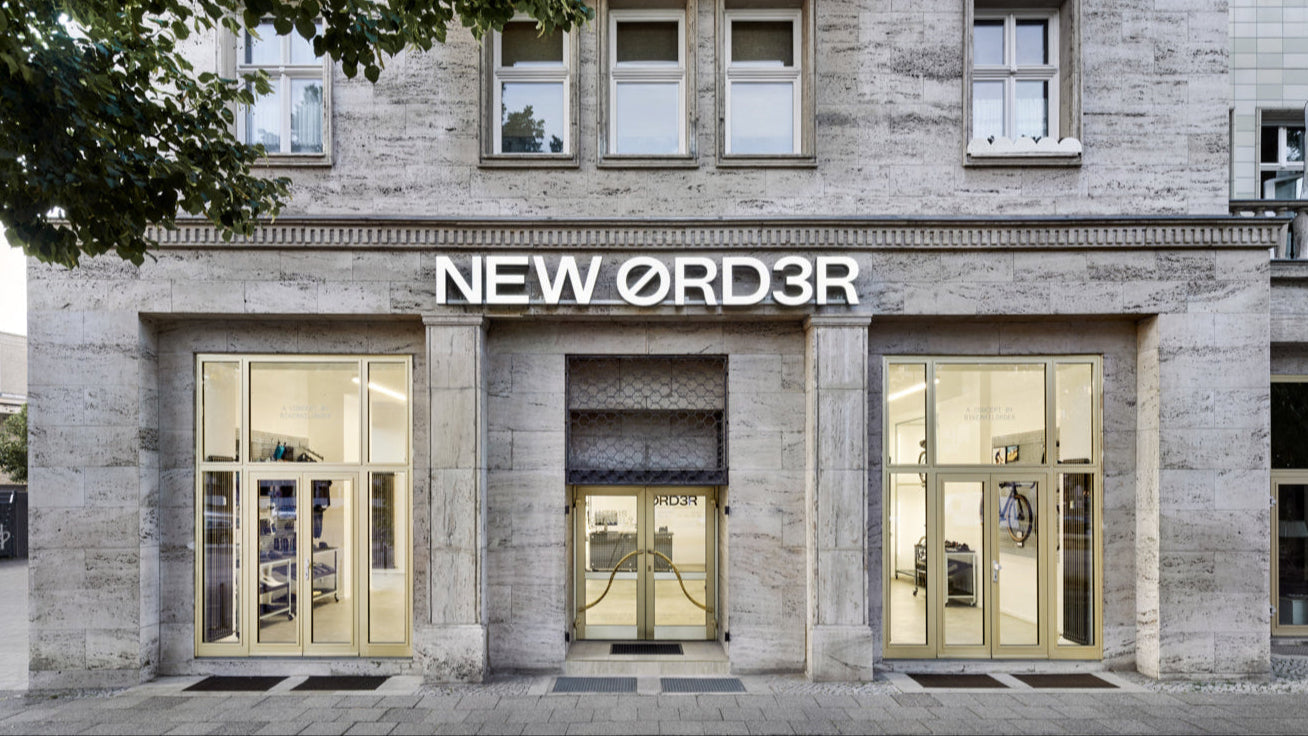

Locking your bike properly isn’t rocket science; something seems to have gone wrong in our cover photo! A few simple tricks can help protect a bike effectively from thieves – and here you’ll find our best tips.
- Which bikes and e-bikes should you lock?
- How should you lock a bike properly?
- Our lock recommendations
- What can you do apart from locking it?
To find out how you can lock your bike securely, you can just put yourself in the mind of a bike thief for a moment and think: what does a bike thief want? In most cases, it’s … easy pickings, as much profit as possible, and not getting caught. The harder you make it for them, the more likely they are to pass your bike by! That leads to the following approach if you want to lock your bike securely:
Do you only need to lock expensive bikes?
Simple answer: no, all of them! Expensive bikes get stolen so they can be resold. Cheap and older bikes get stolen because the thief wants to ride them. But the damage is especially big when a valuable bike is gone. So
- new bikes
- expensive bikes
- brand bikes
- e-bikes
- particularly popular types of bikes like mountain bikes, gravel bikes or road bikes
… lock them up properly, according to all the rules of the art.
Even simple bikes get stolen – so lock them!
Old bikes disappear too. In that case, the thief usually needs their own means of transport, so they grab an unremarkable, older bike and do a few laps on it. This happens especially when the bike isn’t locked properly and can be stolen quickly . So you should also lock an older bike every time.

The rule is very simple: Every bike should be locked when it’s loved or used! Image: Florian Klauer on Unsplash
Lock your bike in 5 steps
Do you remember that quick trip into the bike thief mindset from earlier? That knowledge protects your bike best!
1. Where should you lock your bike?
As a bike thief, you don’t want to be watched. Dark, quiet corners are therefore not a good bike parking spot. The more people pass your locked bike, the harder it is for a thief to steal it unnoticed.
☝️ It’s safer in busy places or in front of shop windows than in dark entrances or quiet side streets.
2. Lock your bike? Attach your bike!
You shouldn’t just lock your bike; ideally you connect the frame to a solid object that can’t be cut through, like a street lamp, a poster stand or a rain downpipe … it doesn’t matter! But watch out! Thieves are also not afraid to saw through fences or stair railings to get hold of a high-quality bike!
Attaching it to a wall or floor anchor is better than just leaving it standing!
At home in the garage, in the carport or in the shared bike cellar of a residential building it sounds safe, but it isn’t! Bikes are popular prey not only for thieves, but also for burglars. Especially at night, they have the chance to crack a lock at their leisure or simply carry the bike away with its security. That’s why you should lock your bike twice at home too, especially overnight! If there’s no big object nearby, you can install a wall or floor anchor.
3. Which bike part must be locked?
The most important rule is: to lock your bike properly and securely, the lock must pass through the frame ! The wheels (especially the front wheel) can be removed quickly – if you only lock one wheel, you might end up walking home with a single wheel in your hand because the rest of the bike has been stolen! You also see parked bikes where a lock has simply been pulled through a wheel. In that case, the wheel isn’t even secured anywhere; the bike can’t be ridden, but this method is definitely not secure, because the bike can simply be carried away.

The wheel is locked, but the bike isn’t – to avoid pictures like this, you should always lock your bike by the frame! Image: Lance Grandahl on Unsplash
4. One lock is good, two are better – for expensive bikes, lock twice!
If you have to leave a high-quality bike or an expensive E-Bike unattended for longer, for example while you’re working, you should lock it with more than one lock !
You can make it particularly difficult for a thief if you secure your bike with two different locks ! Very few thieves travel with a whole toolbox. If they need different tools, for example a bolt cutter for a cable lock and a saw for a U-lock, they’ll probably leave your bike alone if they’re lucky.

With two locks you secure your bike even better! Image © Kryponite
5. How to position the bike lock correctly
- ❗The lock(s) should fit as tightly as possible, so a thief has no room to handle the tools.
- When you lock your bike, the lock should always be placed as far from the ground as possible . That way, thieves can’t set the arm of a bolt cutter on the ground and use their full body weight.
- If the keyhole points downwards, the thief has to bend down conspicuously to crack the locking cylinder.
- Often forgotten, but important: you should also lock your bike on a car bike rack !
6. You can also lock bike parts!
You shouldn’t just lock your bike well; individual bike parts keep disappearing too – and unfortunately not only smaller items like bike baskets or quick-release mudguards. Gear shifters, handlebars and brakes are naturally less affected, but a good saddle or an expensive wheelset is a popular target for clever thieves.
👉There are component security options that let you secure saddles or wheelsets. Axles that go through the fork or other bike parts can also be locked separately. Also lock the child seat, trailer or bike bags – always lock everything!
Summary: Lock your bike – know-how!
- Always lock rear wheel and frame together.
- Better: lock the frame to a solid object .
- Even better: lock the frame to a solid object with one lock and lock the second lock together the frame and rear wheel.
- Park the bike where it can be seen by lots of people.
- High-quality bike parts or add-ons can also be locked.
Which lock to use – our recommendations
↪ Which one is considered the safest bike lock?
There are all kinds of locks for bikes, so choosing can be really difficult. Which lock is best? Here’s a quick overview:
💡Generally, bike locks are either rigid locks or flexible locks.
Rigid bike locks
|
U-lock |
Foldable lock |
|
✅ considered the safest bike lock |
✅ also pretty secure ✅ fits around bike frames and lamp posts |
|
❌ not very flexible ❌ often not long enough to lock the bike to an object ❌ heavy ❌ you need a holder on the bike for transport |
❌ heavy ❌ needs a holder on the bike |
Lock flexibly with cable & chain locks
|
Chain lock |
Spiral, cable lock |
|
✅ the thicker the chain, the more secure ✅ flexible ✅ available in different strengths & lengths ✅ can be transported directly on the bike |
✅ flexible ✅ available in different strengths & lengths ✅ fits around bike frames and various objects ✅ light ✅ can be transported directly on the bike |
|
❌ heavy |
❌ easy to break |
Frequently asked questions & our expert tips for bike locks
Bike lock with locking cylinder or with number combination – which is better?
A locking cylinder with a key is considered more secure. Number combinations and the corresponding locking cylinders are often cracked quickly, because especially with cheaper locks the number cylinder is a weak point.
How long should a bike lock be?
There are locks in different lengths, here you have to weigh up what’s more practical for you.
A longer lock (50 cm and more) can be a bit awkward; it may also be hard to store while you’re riding your bike. On the other hand, you can simply lock the frame and rear wheel together on your bike, connect it to larger objects, or chain multiple bikes together.
|
Our tip: If the lock is too long, always wrap it tightly so there are no gaps where a tool could be inserted. |
What do you need to spend on a bike lock?
The official recommendation is: “about 5-10% of the purchase price of the bike”, because the more expensive the lock, the better the materials and locking cylinder. Especially for high-end bikes, for example expensive fullys, carbon road bikes or e-bikes, a high-quality lock is a must, because these bikes are often stolen for resale. For a cheaper or used bike, a simple, inexpensive bike lock might be enough, but if you like your bike or can’t afford to do without it, a good lock is worth it!
How much does a good bike lock cost?
The price range is wide; you can lock your bike for as little as around €20. Are these locks secure? Well… smaller models are really only suitable for very old bikes, “the kind you don’t mind losing” or you can use them to attach your bike helmet to the bike. Locks under €50 are a good idea if you want to attach bike luggage or a child seat to the bike. From €50 to €70 you get solid locks for common bikes.
The most expensive locks cost a bit over 300 euros – is that necessary?
Yes, you should definitely secure a good E-Bike, your carbon Fully or a cargo-E-Bike as high-quality as possible!
How much does a bike lock weigh?
There are lightweight options, but the heavier a lock is, the more secure it is! More material is simply harder to break. A top-class U-lock weighs about 2.5 kilos, a high-quality folding lock weighs around 1.5 kilos. Cable locks and spiral locks often stay under 1 kilo.
Is a bike lock with a high security rating better?
Good manufacturers sort their bike locks by security classes. But they award these certificates themselves; they don’t confirm independent tests. Security class 3, 7 or 10 tells you how secure the manufacturer rates the lock compared to their other products, so these levels are a good guide.
☝️ Keep the proof of purchaseAttention, IMPORTANT! Bike stolen? Then you have to prove that it was locked! For bike leasing and for bike insurance, you have to prove that you tried to protect the bike from theft. For that you need the proof of purchase for the lock! |
Locking your bike – is that enough?

If locking the bike wasn’t enough, a hidden GPS chip can help you find it again. Image © Lezyne
- You can have your bike registered. Bike coding can also help. You still have to lock your bike, but both measures can deter thieves and make it easier to assign a stolen and recovered bike to the owner.
- Highly recommended for expensive bikes and e-bikes, and mandatory for bike leasing: not only lock it, but also insure it.
- You can equip your bike with a GPS tracker so it can be located.
- A bike alarm that registers movement or shocks and then loudly beeps will likely send thieves running.
🔎 All the important info in the Bike Blog 🔎
Register bike | Have your bike coded | Guide 2026: The best bike locks
Lock your bike: verdict
- You should always lock your bike, no matter how much it’s worth
- Don’t just lock it; lock it to something
- The lock belongs on the frame, not the wheels
- Park the bike where a thief would be seen
- Invest about 5-10% of the bike price in a lock
- For expensive bikes, don’t just lock them; also secure with a GPS chip and alarm
Cover image: Mika Baumeister on Unsplash
🔒Secure & affordable locking – bike locks in the BMO bike shop 🔒
U-locks | Folding locks | Cable locks | Spiral locks | Chain locks | Number combination locks