

You want to store your e-bike battery. The only question is: how? Do you need to protect the battery from frost, or not? Is it better to store it on the e-bike or in the apartment? Should the battery be charged to 20%, 50%, or 90% for storage? Rumors and suggestions often circulate that contradict each other. We clear up misinformation and well-meaning but incorrect advice!
Here you will learn how e-bike batteries and displays should be stored so they don't get damaged. How to store the "rest" of the e-bike can be found in another article. And these tips are especially for winter and frost. If you store your e-bike at another time of year (for a trip or recovery phase after an injury, for example), it should be clean and well lubricated, but you can easily store the battery on the bike! In any case, you should check the user manual before storing your e-bike. There you will usually get tips for your device directly from the manufacturer. These manufacturer instructions are, of course, always the top priority!
Storing E-Bike Battery - Here's how!
Even if you don't usually remove the e-bike battery because it can be charged on the bike, you should take out the key for the battery compartment before winter and take the battery inside. Most external e-bike batteries are secured with a lock. Integrated batteries are located behind a closed flap in the frame of the e-bike. So - just unlock and take the battery with you!
If you ride your e-bike in the winter, you should still store the battery indoors overnight, during work, or on weekends.

Somehow, an e-bike battery can usually be removed so you can store it! Image © Trek
You can then store your e-bike battery in a cool, dry room. You should NOT leave it connected to the charger while storing!
At what temperature should an e-bike battery be stored?
Batteries and accumulators do not like extreme temperatures, neither heat nor cold.
The best storage temperature is between 10 and 20 degrees Celsius, which is rather cool but not cold. In a heavily heated room, the stored e-bike battery does not feel quite comfortable either.
The rumor still persists that a battery should always be fully charged, then completely discharged, and then fully charged again. Manufacturers now recommend a different approach. You can always fully charge the e-bike battery, but completely depleting the charge is not recommended.
At what charge level should you store your e-bike battery?
One of the largest manufacturers of e-bike drives recommends: If you want to winterize your bike battery, you should do so at a charge level between 30 and 60%.
If your e-bike battery shows a higher charge level, it's a good opportunity for a farewell ride before storage. If it's less, you can simply recharge a bit. It is also advised to check the charge level now and then during several months of storage, even though newer batteries generally do not discharge on their own anymore (more information on self-discharge can be found below).
The rumor still persists that a battery should always be fully charged, then fully discharged, and then fully charged again. Manufacturers now recommend a different approach. You can always fully charge the e-bike battery, but fully depleting the charge is not recommended.
Do I have to store my e-bike and battery in winter?
We explain here how you can store your e-bike and battery in winter. But you don't have to store it, of course, you can use your e-bike all winter long. This generally doesn't harm a good e-bike! You should just clean and lubricate it from time to time according to our care instructions, so it usually withstands winter use unscathed.
The only difference to a regular bike: On cold days, take the battery and display inside the house or with you to the office during work. You don't have to remove both devices at every store during a shopping trip, but a prolonged cold spell is not good for them. There are suitable neoprene covers that insulate the battery for the way home or short trips. They also protect the device from road salt and moisture.

For longer idle times in winter, you should remove your battery and bring it to a warm place, even if you use the e-bike daily. Image © Trek
Not only is the e-bike battery sensitive to cold, but some displays also do not handle frost very well. If the e-bike display can be removed, you should do so for the storage period. It is then usually powered by batteries operated, you should remove them so they don't leak in the device. If it cannot be removed, you don't have to worry about it breaking immediately. It will probably be powered by the E-bike's battery and at least doesn't have its own batteries or accumulators that could cause trouble.
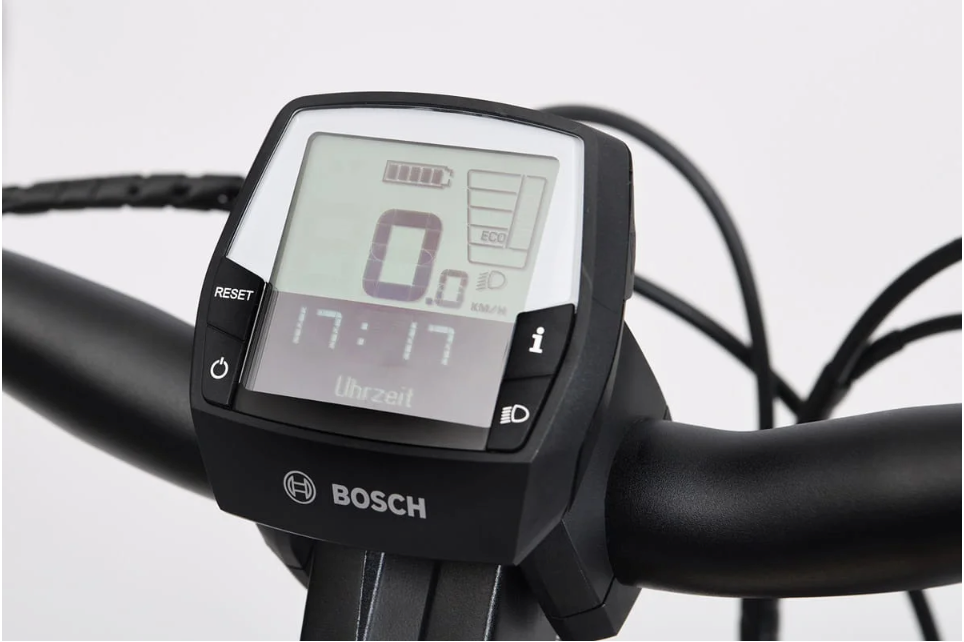
Not only should the battery be stored at mild temperatures, but you should also remove the display if possible. Image © Winora
The E-bike battery has less range in winter
If you ride your E-bike in winter, you will probably notice that it has less range than in summer. In freezing temperatures, the capacity of a battery decreases, because the processes that drive your device are significantly slowed down. This is not only the case with E-bikes, your phone reacts similarly to cold! You should consider this when planning your tours.
The self-discharge of the stored E-bike battery
You might remember the problem from your Walkman batteries "from back in the day": You fully charged the device and put it aside for a while without using it. Still, the batteries eventually became empty. When a battery-powered device is stored for an extended period, batteries and accumulators slowly lose some charge, even though it hasn't been used. The longer the storage, the less residual charge might be left. This effect is called "self-discharge."
The real problem with self-discharge is not the empty battery, but the deep discharge. When your E-bike battery indicates that it wants to be charged, there is always a certain residual voltage present. However, this must not be undercut, and exactly that would happen in a deep discharge. Depending on the battery type, a deep discharge can damage the battery. For this reason, batteries should be stored with a charge of 30 to 60% and the remaining charge level should be checked occasionally during storage. Most batteries have an integrated charge level indicator that reveals how much charge is left at the push of a button. If it drops, you should also recharge a bit during storage. Leaving the charger connected during storage is not a good idea!

The charger must not remain plugged into the stored E-bike battery for days or even months! Image © Trek
And the good news is: With modern batteries – as well-known brand manufacturers assure – this effect hardly matters anymore. So if you want to store your e-bike battery over the winter, you usually don't have to worry that it will be completely empty in the spring, but an occasional check doesn't hurt. If you suspect that your battery is deeply discharged because it can no longer be charged, you should inquire with the manufacturer or at a bicycle workshop.
And where to put the rest of the e-bike?
We have a blog post for you that tells you exactly how to prepare your bike or e-bike for long-term storage. You should read it if you want to park your bike for a while! Since it's more or less just a bike without a motor and battery, the same rules apply to an e-bike as to how a regular bike is winterized.
Here in brief:
- Wash the bike thoroughly.
- Once it has dried, you should lubricate it well.
- Store it in a dry place. Ideally, a frost-free location without direct sunlight.
- If you park your e-bike without the battery and display, you should keep the contacts dry and clean.
- Lock your bike securely.
You should also store the e-bike battery charger carefully!
At first glance, this advice might seem unnecessary. But the charger is an important part of your e-bike, without a charger, nothing works! Many e-bikes weigh between 25 and 30 kilograms, without the motor they are difficult to move. You don't want to suddenly face the problem that you can no longer charge the – actually intact – e-bike! And a new charger is expensive, especially if you have a speed charger, which is a particularly fast charger for your e-bike battery.
- You should definitely store your battery charger dry so that the contacts do not rust.
- The plug contacts should also be kept clean so that you don't push dust or abrasive particles into the e-bike's charging port. Small grains can scratch the contacts over time or even wear out the charging port until the plug no longer holds.
- The cables should not be kinked when you wrap them around the power adapter box for storage.
- When the e-bike battery is fully charged – unplug!
- If you don't use your e-bike over the winter, you should also bring the charger inside and not leave it in the cold, damp garage at sub-zero temperatures.
It is also advised not to replace the original charger with an aftermarket device! Inferior chargers often have numerous faults, charge with the wrong voltage, or generate so much heat that they set their base on fire, and so on.
If the battery was stored incorrectly
If your battery has significantly lost range after the winter or no longer works, it must be replaced with an identical battery . It's best to replace a defective e-bike battery with an original spare part from the bicycle or drive manufacturer, then you can be sure that it fits your motor.
Wintering the bicycle battery without problems…
… is not as difficult as you can see. With these tips, your e-bike will get through the winter rest well and undamaged. Nevertheless, it doesn't hurt to "de-winter" your e-bike after a longer storage, meaning thoroughly checking it and fully charging the battery.
Further tips for a good bicycle winter can also be found here on the blog:
- Clean and maintain the bike: Clean through the winter in 5 steps
- Winter cycling clothing – the best frost protection
- Winter with the bike – finally safe through ice and snow!
- Everything you need to know about bike storage
- Charging the e-bike battery – here's how
- E-Bike Guide 2026
Title image: KBO on Unsplash